
Donor-funded spine navigation equipment at HSC helps prevent paralysis after devastating injury
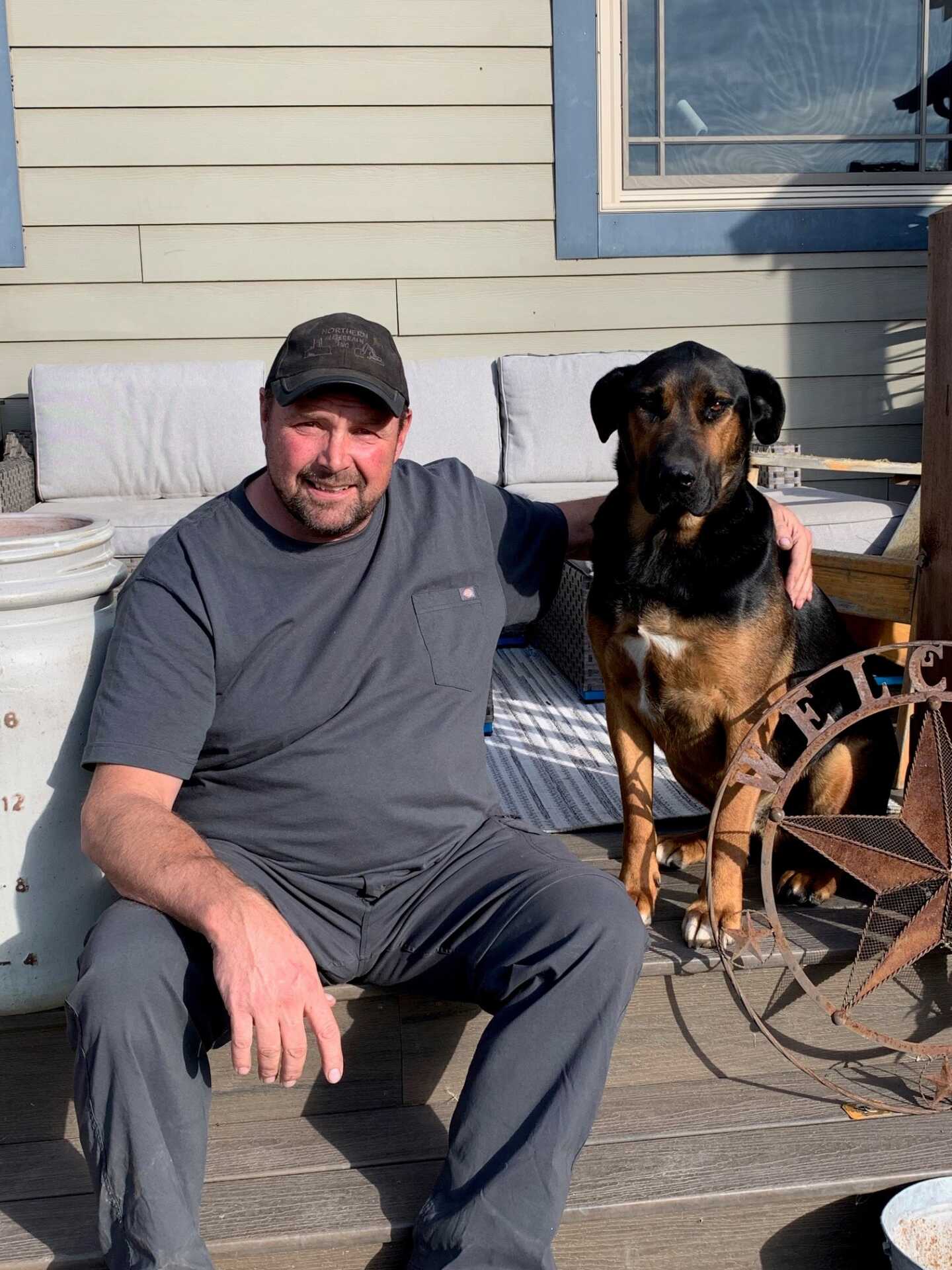
Sean Rickards, husband and father of three, was crushed between an 18-ton truck and the bucket of a 20-ton excavator: “I was within a millimetre of my life.”
“Do what you need to do.”
That faint whisper to an emergency room physician in Grandview was the last thing Sean Rickards remembers saying before being intubated and put in an induced coma in late October 2023. It would be close to three weeks before he would speak again.
Rickards, a self-employed contractor, was rushed to the nearest emergency room after a devastating worksite accident that saw him crushed between an 18-ton truck and the bucket of a 20-ton excavator. His ribs were broken, both lungs had collapsed, and his thoracic vertebrae were shattered.
“We were filling a farm dugout and the truck got stuck. I got out of the excavator to attach a chain to the truck. I was bent over so the driver of the truck couldn’t see me. And I couldn’t hear the truck’s alarm when it backed up because of the excavator’s engine, so I got pinned between the two,” says the father of three. “I was within a millimetre of my life. It was a miracle I wasn’t cut in half or killed.”
At Grandview, Rickards was stabilized and prepped for the air ambulance fl ight to Health Sciences Centre in Winnipeg where surgical teams were waiting.
“To be honest, when you hear about a patient like this coming in, you fi gure that he’s going to be paralyzed,” says spine surgeon Dr. Jay Toor. “You feel like you’re in damage control mode, hoping that surgery will at least help the patient sit upright in a wheelchair.”
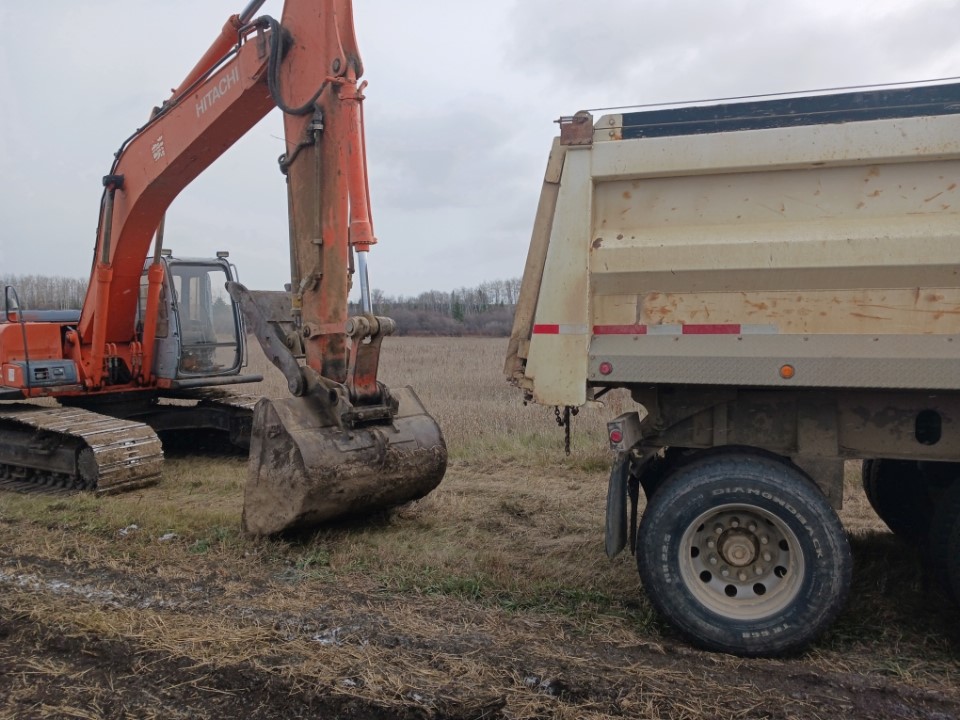
The site where Sean Rickards was pinned between a truck and an excavator. “It was a miracle I wasn’t cut in half or killed,” he says.
But thanks to Dr. Toor, thoracic surgeon Dr. Sadeesh Srinathan, and so many other dedicated HSC personnel, not only did Rickards avoid paralysis, he was walking up and down the hospital hallways after three weeks and even returned to his worksite with a crew six months later to finish fi lling the dugout.
The surgery was an example of HSC teamwork and technology producing the best possible outcome. The surgery began with Rickards on his back so Dr. Srinathan could repair his ribs and stabilize his sternum. Rickards was then turned over so that Dr. Toor could repair the vertebrae, supported by navigation equipment funded by donors to the HSC Foundation’s Operation Excellence campaign. The 3D visualization enabled by the equipment allowed Dr. Toor to perform his work with maximum precision while protecting the spinal cord.
Another procedure was required later on to address some “debris”, as Rickards calls it, that had settled around his heart.
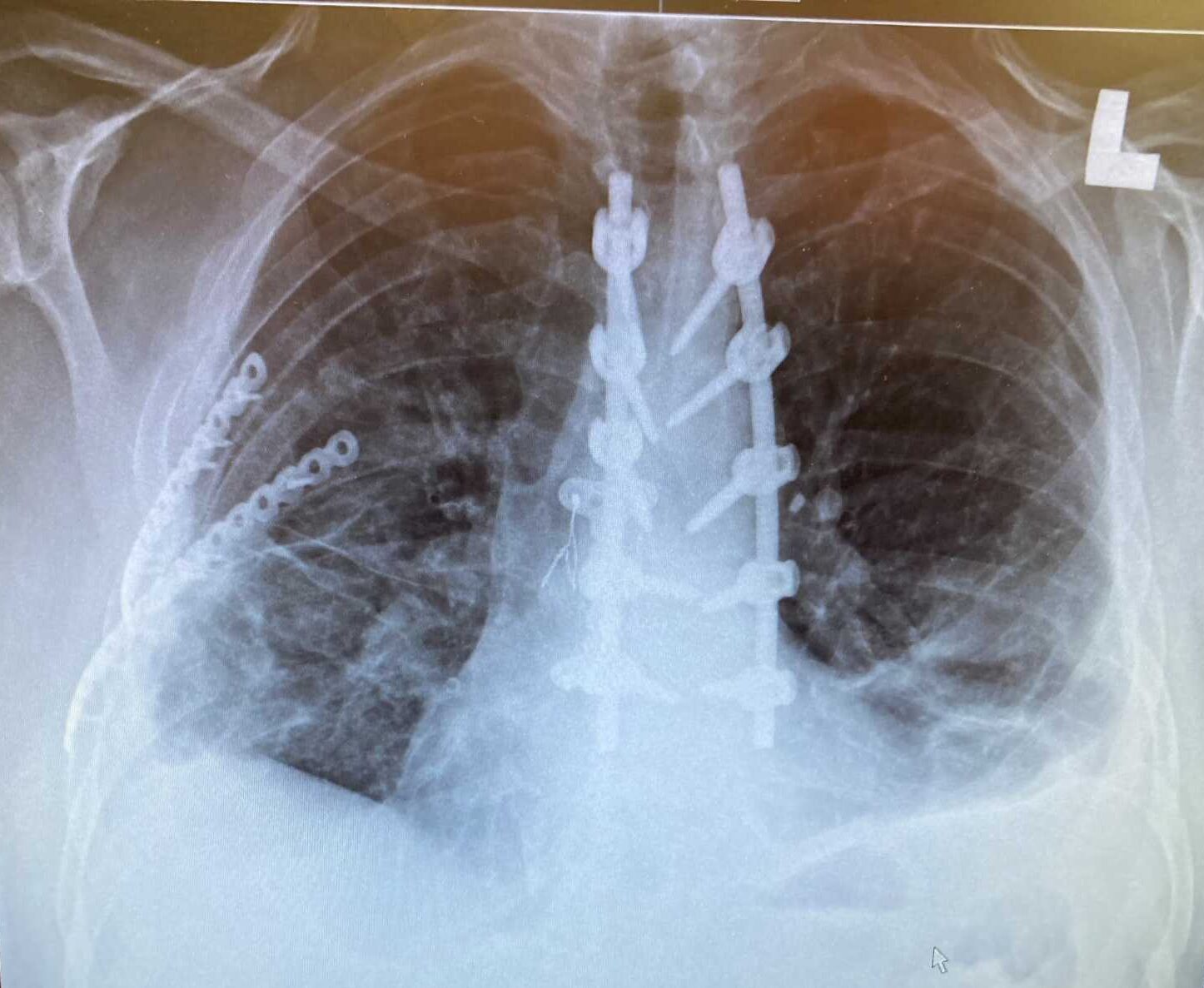
“They did everything humanly possible and then some.” The X-ray shows the rods and sternum plate that stabilized Sean Rickards’s chest and spine.
Now, three years later, Rickards continues to reflect on the episode with gratitude and awe for the surgeons, nurses, and the entire team involved with his care: “They did everything humanly possible and then some. I have a lot to fight for and they were with me all the way.”
Mindy Rickards, Sean’s wife, shares a similar sense of gratitude, even with the passage of time: “The people at HSC cared not only for Sean, but for our whole family. We had regular updates, they always answered our questions, and they treated us with compassion.”
And after his harrowing experience, what does Sean Rickards want HSC Foundation donors and all Manitobans to know about HSC?: “We often read about shortcomings in the health care system, but I’ve always believed that bad news can make its way around the world before good news can get its pants on in the morning,” he says. “From personal experience, I can tell you that there’s a lot of good news at HSC.”