
Foundation-funded researcher explores the health benefits of Saskatoon berries
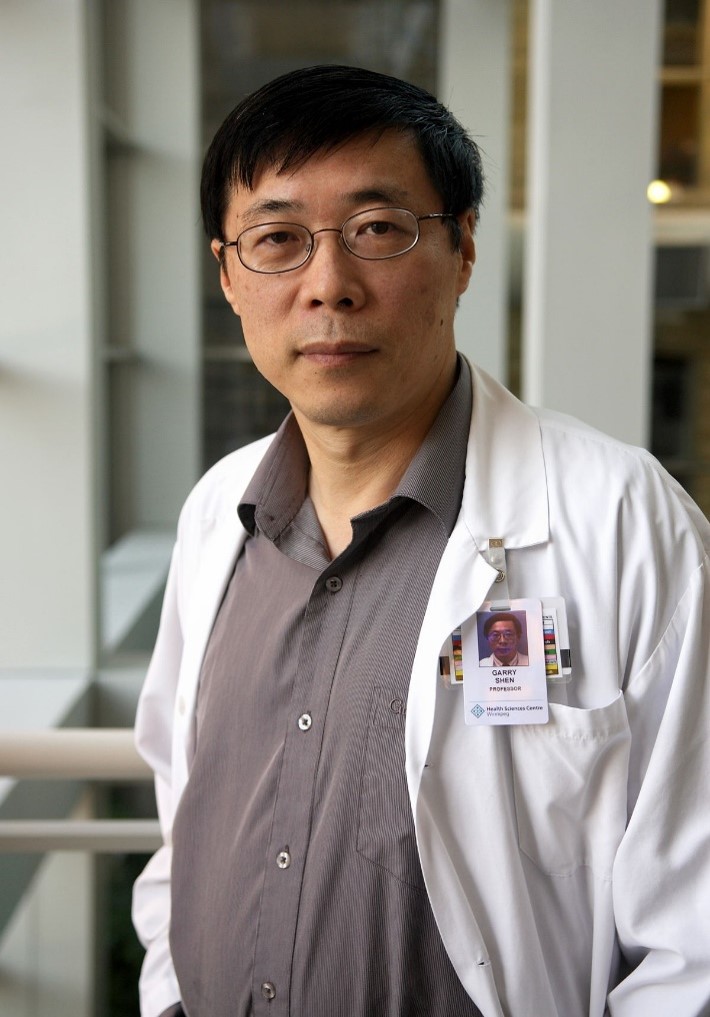
Dr. Garry Shen, speaking on the availability of Saskatoon berries in remote communities: “You don’t need to go to the grocery when you can get them from the ground.”
Dr. Garry Shen has been on the frontlines of the battle against type 2 diabetes for more than 20 years, passionate about the prevention and management of a disease that is especially prevalent in Manitoba.
“About 30 percent of adults in Manitoba have type 2 diabetes (T2D) or prediabetes,” notes Dr. Shen. “That number jumps to close to 50 percent for adults in First Nations communities. And Manitoba has the highest rate of youth onset type 2 diabetes in the country.”
T2D is a condition where the body can’t properly use insulin, causing too much sugar to build up in the blood over time. It is typically caused by poor diet and sedentary lifestyles, although there are some genetic factors as well. Advanced, untreated, or mistreated T2D can cause a wide range of negative health outcomes including heart attack, stroke, limb loss, blindness, and kidney disease.
Building on his own earlier work and the work of others exploring the potential health benefits of Saskatoon berries, Dr. Shen and his team at the Max Rady College of Medicine recently concluded the first known human trial to see what impact these berries could have in diabetes prevention in healthy adults. This work, partially funded by HSC Foundation donors and recently submitted for publication in relevant medical journals, showed very promising and exciting results.
Trial participants were fed 40 grams of dried Saskatoon berries every day for 10 weeks, and the results were noteworthy. “We observed that Saskatoon berries reduced fasting blood glucose by about 4.3 percent and lowered two-hour glucose levels after an oral glucose tolerance test (OGTT) by close to four per cent,” says Dr. Shen. “There was also evidence of reduced insulin resistance, and earlier work showed positive effects on cholesterol and blood pressure.”
Dr. Shen is excited about the potential impact on Manitobans, particularly First Nations people living in remote communities where Saskatoon berries grow wild and have been a dietary staple for generations. “You don’t need to go to the grocery when you can get them from the ground,” he says of the berry. “You can even pick them in the city at parks!”
T2D prevention is key, notes Dr. Shen, and there is still much to be learned about Saskatoon berries and other potential prairie superfoods. “The funding we get from the HSC Foundation makes this work possible,” he says. “My colleagues and I are grateful to have an opportunity to serve the community.”
HSC Foundation donors can help Dr. Shen and other researchers move innovative science forward. Your support will enable today’s discoveries to improve people’s lives now and forever. Visit our donation page and choose Research at Health Sciences Centre from the dropdown menu.