
Donor-funded robot makes surgery an option for more patients
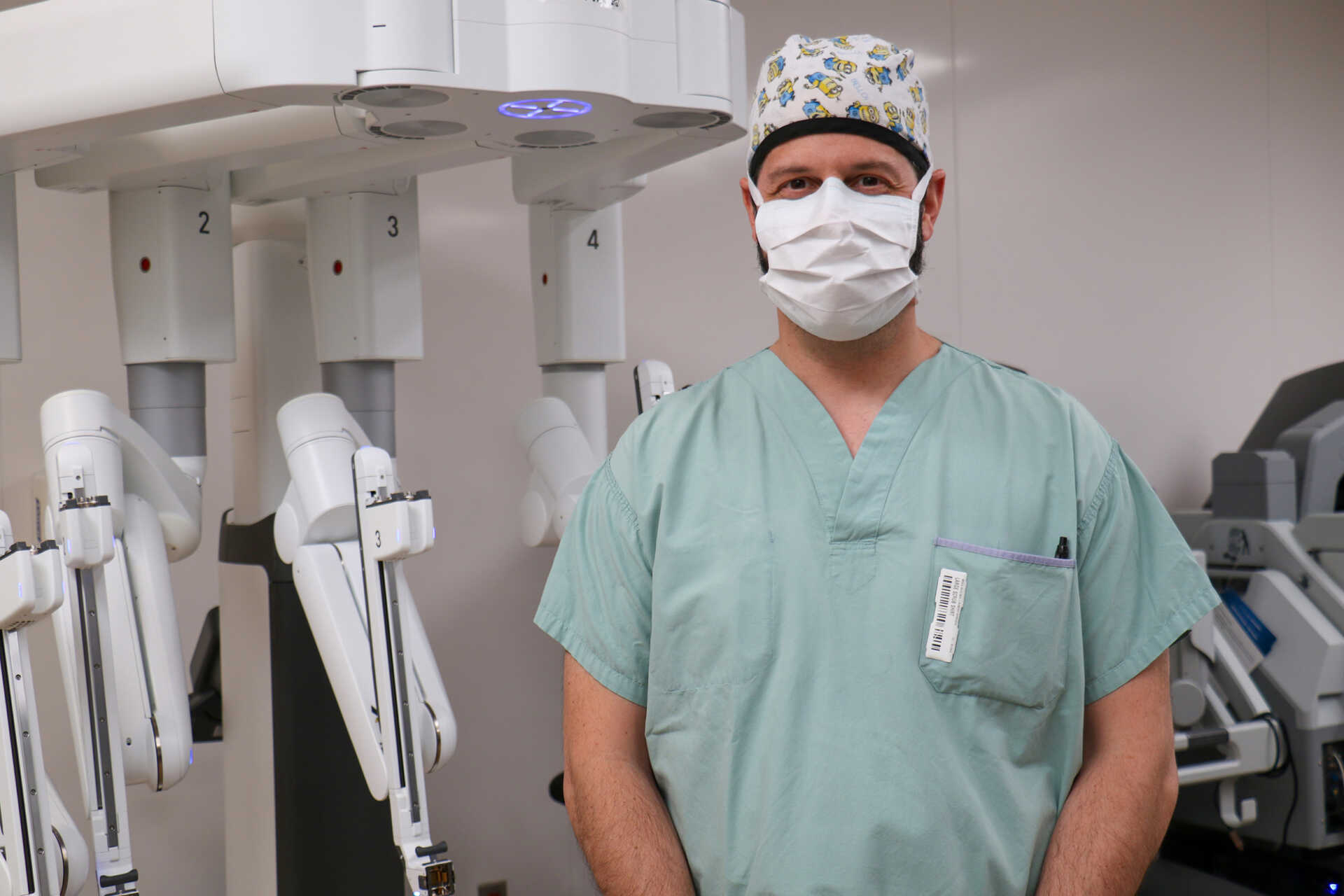
Dr. Alon Altman: “Donors are helping the patients I care for, strengthening our health care system, and giving surgeons the tools we need to deliver the best possible care.”
For some patients with gynecologic cancer, a surgical option at Health Sciences Centre used to be off the table because their bodies couldn’t safely endure it. Today, thanks to the donor-funded da Vinci Xi surgical robot, that reality is changing. Patients who once faced limited options can now undergo safe, robot-assisted surgery that removes their cancer and gets them on the road to recovery.
Dr. Alon Altman, a gynecologic oncologist at HSC, sees the impact firsthand. The robot, a centrepiece of the HSC Foundation’s Operation Excellence campaign, was first deployed in September 2024. Since then, Dr. Altman has observed that roughly one in four of his robotic surgery patients would not have been candidates for traditional minimally invasive procedures. Without the robot, many would have required large open incisions, or might not have been able to have surgery at all.
“These are patients whose quality of life would have been significantly affected,” Dr. Altman explains. “They might have lived with ongoing bleeding, repeated treatments, and constant monitoring. Now, many are going home the day after surgery. Some go home the very same day, cancer-free. For these patients in particular, robotic surgery is a game-changer.”
The da Vinci Xi allows surgeons to operate with extraordinary precision, using tiny incisions and advanced visualization. For patients, that means less pain, a lower risk of infection, a much faster recovery, fewer complications, and shorter hospital stays. And Dr. Altman has also observed that robot-assisted surgery has produced a lower conversion rate than other forms of minimally invasive surgery.
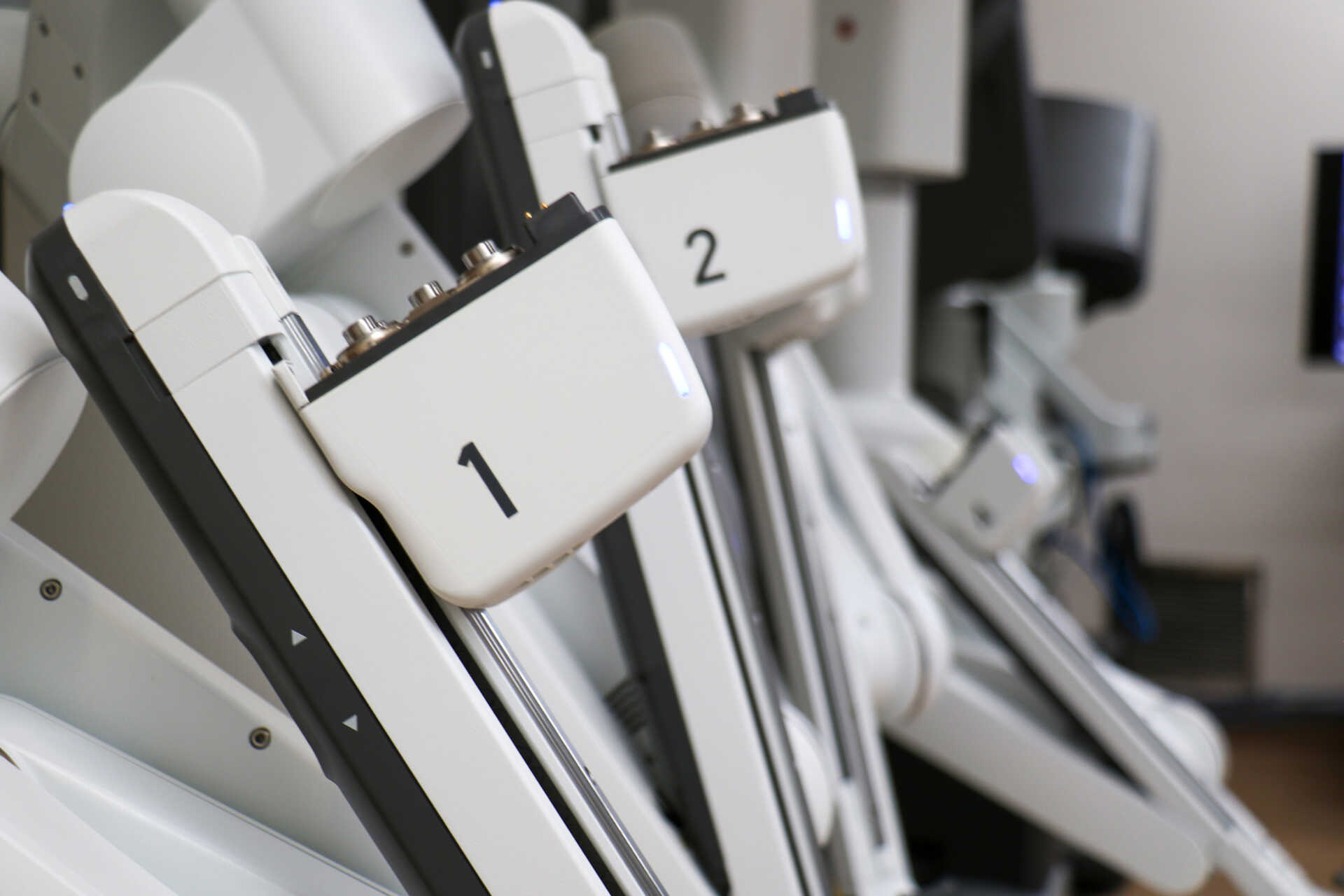
In surgery, a “conversion” happens when a minimally invasive procedure has to be switched mid-operation to an open surgery with a large incision. Before the da Vinci Xi robot, this was much more likely for complex cases, especially for patients with additional medical challenges. With the robot, Dr. Altman and his colleagues are converting far fewer cases to open surgery, because the da Vinci technology allows for better control in difficult situations. That matters because open surgery usually means more pain, a much longer hospital stay, and a much higher risk of infection. Fewer conversions mean safer surgeries and faster recoveries for patients who previously faced much tougher outcomes.
And the benefits extend beyond patients. Open surgery and more conventional forms of minimally invasive surgery can take a physical toll on surgeons, who often stand for hours in strained positions over their patients. With the robot, Dr. Altman operates while seated in a comfortable position at a console that resembles an arcade game. “At the end of a long surgical day, I’m no longer in pain,” he says. “That matters for endurance, for focus, and for being able to do your best work.”
For patients, surgeons, and future surgeons currently training on the robot, the impact is significant and the fact that this was made possible by generous donors to the HSC Foundation is not lost on Dr. Altman. “My colleagues and I are incredibly grateful,” he says. “Donors are helping the patients I care for, strengthening our health care system, and giving surgeons the tools we need to deliver the best possible care.”
Read the story of Sylvia Molnar, who was treated by Dr. Alon Altman using the donor-funded da Vinci Xi surgical robot at HSC Winnipeg.
The da Vinci Xi surgical robot was made possible by generous donors to the HSC Foundation’s generational Operation Excellence campaign, an ambitious initiative to modernize surgical care at HSC. Your support can help improve care and reduce wait times for Manitobans. Make your online gift today at https://www.hscfoundation.mb.ca/donate/ (select “Operation Excellence” from the menu of funds).