
Donor-funded equipment enables life-changing surgery for Lake Francis mom
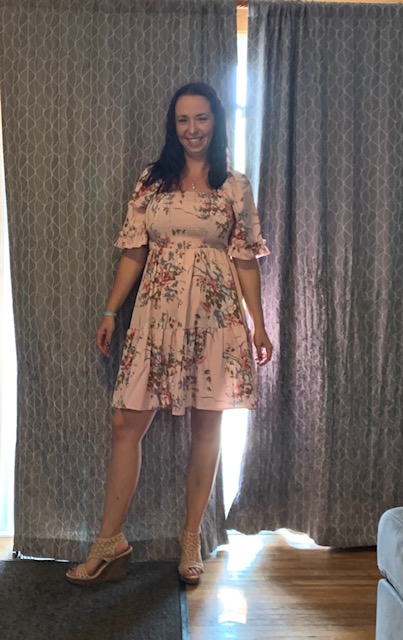
Candace Andries’ total hospital stay was eight hours long: “When I stood up, the leg pain was gone and I could move my toes. Nothing hurt at all. The relief was immediate.”
Whether coaching at home plate or washing a dinner plate, Candace Andries’ slipped disc was dishing up some serious leg pain one year ago.
The mother of three young children was raking her large yard in Lake Francis in the RM of Woodlands in March. An achy back after the spring clean-up soon escalated into unrelenting leg pain. “I couldn’t stand for more than a few minutes,” says the U9 girls softball coach. “Anything vertical was just not happening.”
Believing it was sciatica, Andries decided to wait it out until the pain settled down. She sat down to prepare family dinners and wash the dishes; she sat on a bucket to coach her players. The pain persisted for weeks and she could no longer wiggle her toes. Sensing the urgency of the situation, a nearby public health nurse sent her for a CT scan, which showed a herniated disc in her lower back pressing against critical nerves.
After the scan, she was referred immediately to Dr. Alysa Almojuela, a neurosurgeon at HSC, who told Andries that she would need surgery.
“At first I was scared. You hear ‘spine surgery’ and you assume the worst,” says Andries. “I figured they were going to cut me wide open and my life was going to get very hard, very fast.”
That ended up being far from the case.
With new equipment, funded by donors to the HSC Foundation’s Operation Excellence campaign, Dr. Almojuela was able to perform one of Manitoba’s first endoscopic microdiscectomy procedures in early September. Through one very small incision, Dr. Almojuela used a tiny camera and specialized instruments to remove the portion of the disc pressing on the nerves.
“The cut was so small that it only needed three stitches,” says Andries. “You could put a regular Band-Aid on it.”
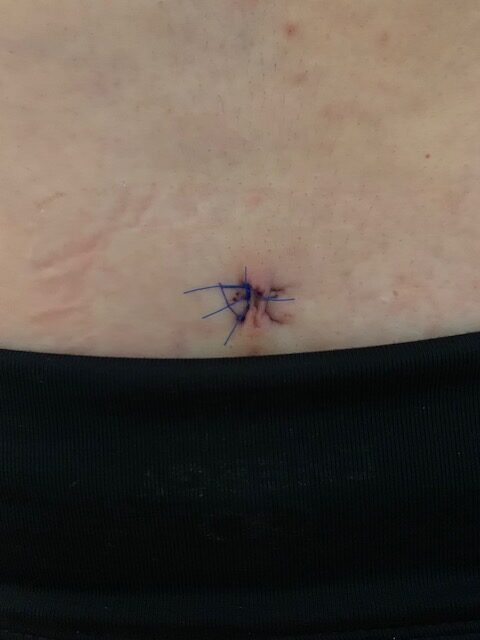
The small incision in Candace Andries’ lower back required only three stitches: “The fact that they could fix my disc through such a small opening blows my mind,” she says.
Grogginess from the anesthesia aside, Andries felt immediate relief after the surgery and marvelled at the speed of her discharge.
“I arrived at HSC at 6:00 a.m. and the surgery began at 8:00. By 2:00 p.m. I was on my way home,” says Andries. “When I stood up, the leg pain was gone and I could move my toes. Nothing hurt at all. The relief was immediate.”
Within a few days, Andries was back to her routine, caring for her family, managing her home, and reclaiming her independence. She was even able to help build a chicken coop on the family property.
As far as coaching softball goes, she’s getting ready for the new season and even expecting to play a bit of ball herself this summer. As Andries swings for the fences, she’ll do so with a strong sense of gratitude for Dr. Almojuela, the HSC staff, and the Foundation donors who made her minimally invasive procedure possible.
“The fact that they could fix my disc through such a small opening blows my mind,” she says. “Without that equipment, without those donors, and without Dr. Almojuela, I couldn’t have gone back to being a mom as quickly as I did.”
The equipment that was used in Candace Andries’ surgery was funded by the HSC Foundation’s Operation Excellence campaign. The campaign has invested millions of dollars to date in facility upgrades and new technologies—investments that have enticed leading surgeons, including Dr. Alysa Almojuela, to join HSC. “There’s a push at HSC to improve patient care and decrease wait times and that energy is contagious,” said Dr. Almojuela. “It is something that I really wanted to be a part of.” You can support Operation Excellence today by visiting our donation page.