
How Philip Lee’s quick action and specialized neurosurgical care at HSC saved his life
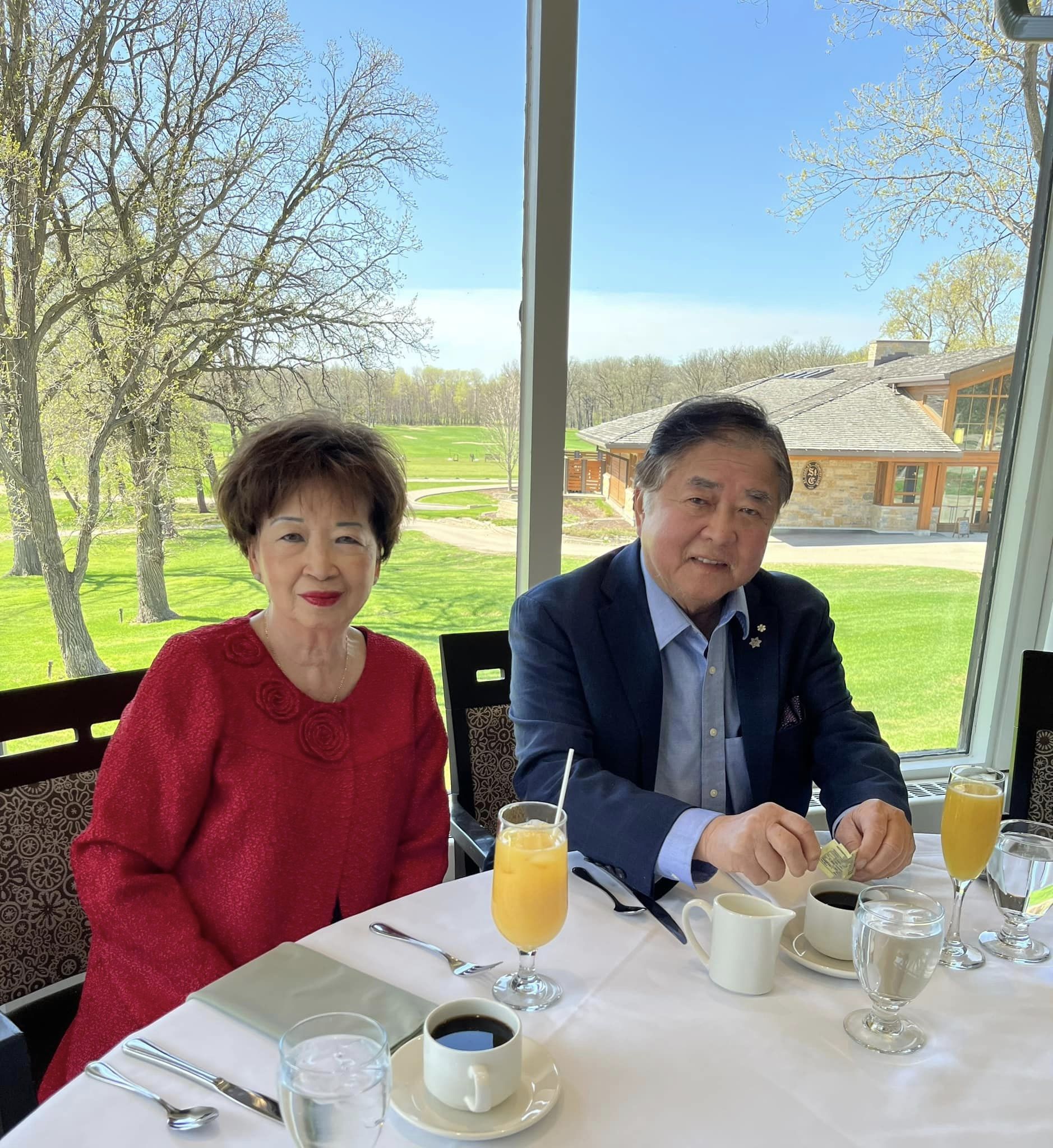
Philip Lee, C.M., O.M. with his wife Anita Lee.
Philip Lee, C.M., O.M. realized something was wrong, and he knew he couldn’t ignore it.
“I got into the elevator in my building and suddenly my left hand wouldn’t work,” recalls Lee of the mid-July event. “I dropped the soft drink can I was holding and couldn’t pick it up.” With a strong family history of stroke and brain injury, Lee understood the urgency. “I knew something was happening in my brain and I told myself that I shouldn’t wait until morning.”
Lee went right away to a nearby emergency room where a CT scan revealed bleeding on the right side of his brain. He was diagnosed with an acute subdural hematoma (a serious bleed between the brain and the skull) and transferred by ambulance to Health Sciences Centre (HSC) for emergency neurosurgical care.
At HSC, Lee (Manitoba’s 24th Lieutenant Governor) says he immediately felt reassured. “I had complete confidence that they knew exactly what to do,” he says. Neurosurgeon Dr. Jason Beiko met him at his bedside to explain the situation clearly and calmly. “He told me it was serious, but he also told me he understood my case very well,” Lee recalls. “He said, ‘I can’t guarantee anything 100 percent, but I’m confident this will go well.’ That gave me a lot of peace.”
The two-hour surgery was successful. Lee remembers waking up in recovery to encouraging news. “Dr. Beiko came to see me and told me the surgery was a complete success,” Lee says. “I was groggy when I heard the news, but happy and relieved.”
The care continued the following day with a second procedure in the Paul Albrechtsen Interventional Radiology Suites. Using advanced imaging and specialized techniques, physicians sealed damaged blood vessels to reduce the risk of future bleeding. The minimally invasive procedure, known as EMMA (embolization of middle meningeal artery), was performed by Dr. Jai Shankar. Click here to learn more about Dr. Shankar’s ongoing EMMA research.
“They explained what they were doing and why,” Lee says. “I always felt informed and safe.”
During his recovery, Lee was closely monitored by nurses and clinical staff who checked his strength, vision, and balance each day. “They tested my hand strength, made sure I could walk, and helped me regain confidence,” he says. “The staff were incredibly attentive and kind.”
His recovery progressed quickly. Within days, he was walking independently and showing no signs of lasting neurological effects. “The doctor told me my recovery was going better than expected,” Lee recalls. After follow-up scans confirmed the success of both procedures, he was discharged in less than a week and soon after cleared to resume driving and daily activities.
Looking back, Philip Lee describes the experience with deep gratitude. “The care I received saved my life,” he says. “The surgeons, nurses, and everyone else was professional, compassionate, and dedicated.”
His message to others is simple, but critically important. “If you feel something isn’t right, don’t hesitate to get help,” he says. “I’m here today because I acted quickly and because of the exceptional care at HSC.”
Philip Lee, C.M., O.M.’s and his wife Anita are members of the Bannatyne Legacy Circle. Click here to read their legacy story.
To support continued excellence in neurosurgery at Health Sciences Centre, please donate to the HSC Foundation’s Neurosurgery Research, Education, and Innovation Endowment Fund. Click here and select the fund name from the drop-down menu or call our office at 204-515-5612 or toll-free at 1-800-679-8493